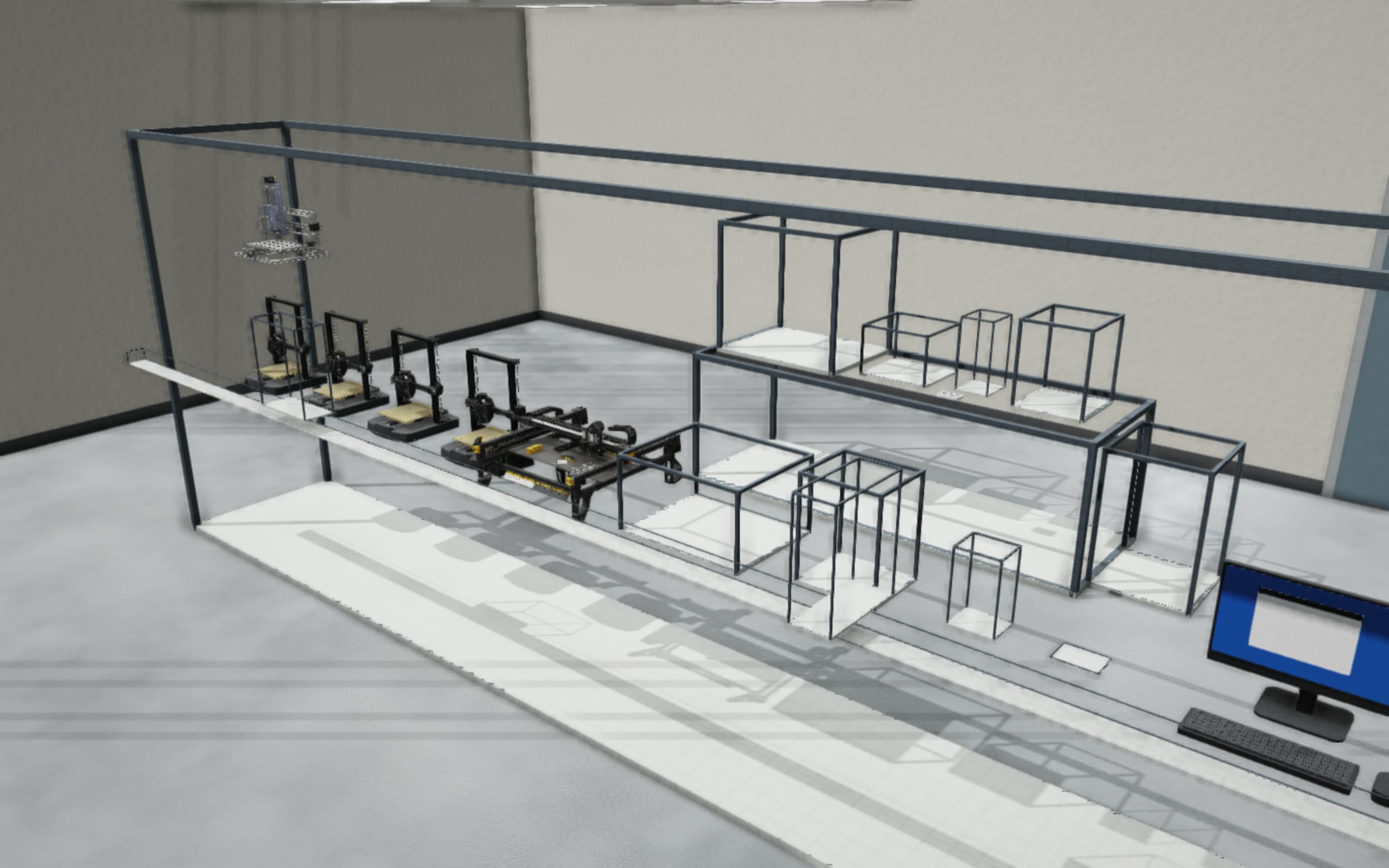
Printers and a CNC on one floor.
Each machine is a unit of a world, named by its device definition and placed where it stands. The twin is the same world, run in simulation.
Case study · the fab cell
A 20 ft cell, 22 units in one file.
The fab cell ships with the workbench as a simulation world: a three-shelf cell with printers, a CNC, a pick-and-place machine and a workstation, beside a wet-lab bench. The stations that have no device definition yet (the reflow cell, the transport rail and arms, the plate reader) are proxies. The film above is this world.
- units in one
world.tsx - 22
- Ender-3 V3 SE printers and 1 3018 CNC
- 4
- proxies: a size and a place, no channels
- 14
- units marked uncommissioned
- 7
cloud://global/worlds/fab-cell/world.tsxResultado case-studies/digital-twin/stats.jsonHerramienta scripts/sites/case-studies.mjs digital-twinSe ejecutó en This computer (dell-gb10-1)Cuándo The shop, as a physical world
92 units in our shop. 0 physical runs yet.
CommandAGI's own shop is a kind: physical world. A twin run of it is a simulated run of that world, and only a physical run reaches hardware. None of its runs exist yet: its 34 units with channels are all uncommissioned (see commissioning). The twin's timeline of a real print job is on printer runs.
- units, 58 of them proxies
- 92
- units with channels, all uncommissioned
- 34
- runs in
worlds/fleet/runs/ - 0
cloud://home/user-commandagi/worlds/fleet/world.tsxResultado case-studies/digital-twin/stats.jsonHerramienta scripts/sites/case-studies.mjs digital-twinSe ejecutó en This computer (dell-gb10-1), reading the production DriveCuándo Model your floor as a world.
Place each machine from its definition, run the floor in simulation, and the same world reaches the machines once each is commissioned and someone holds a grant for it.