The books are a plain journal.
A company's books are an hledger journal its code names. The company app reads the profit and loss and the balance from it, computed on view and never written.
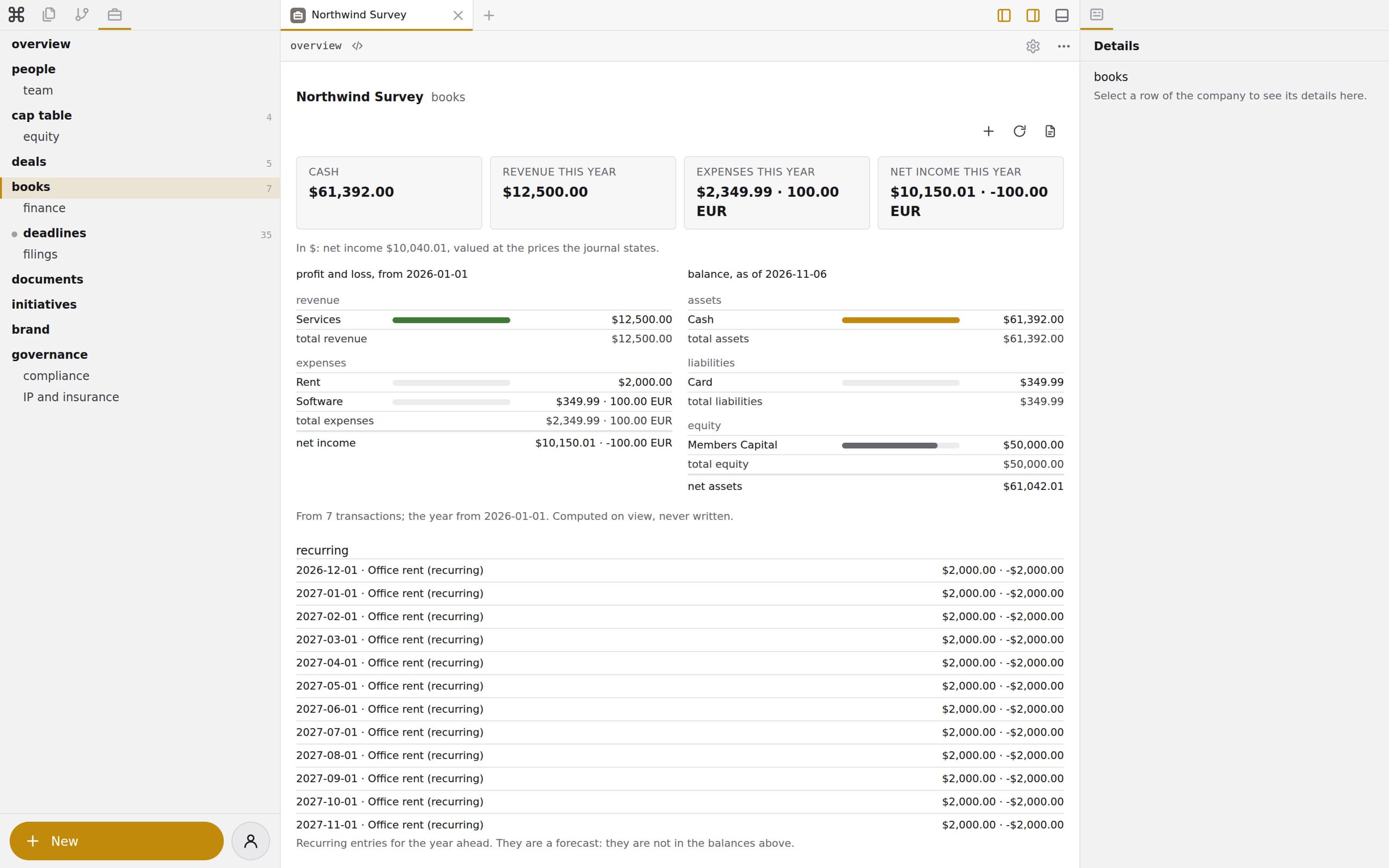
The company names its journal.
The books stay an hledger journal, because that open format is the faithful record. Any hledger tool reads the same file. An entry added in the app or by an agent is a transaction appended to it.
Recurring entries are a forecast. A periodic transaction in the journal shows in the year ahead and never changes a balance; the budget compares the year's actuals with it.
<Books journal={`${folder}books/main.journal`} />Runway, from the cash accounts.
Cash is the balance of the cash accounts; burn is the mean net outflow of the last whole months. When cash grew, the view says there is no runway to count. Beside it: cash in and out by month, and the budget against the year's actuals.
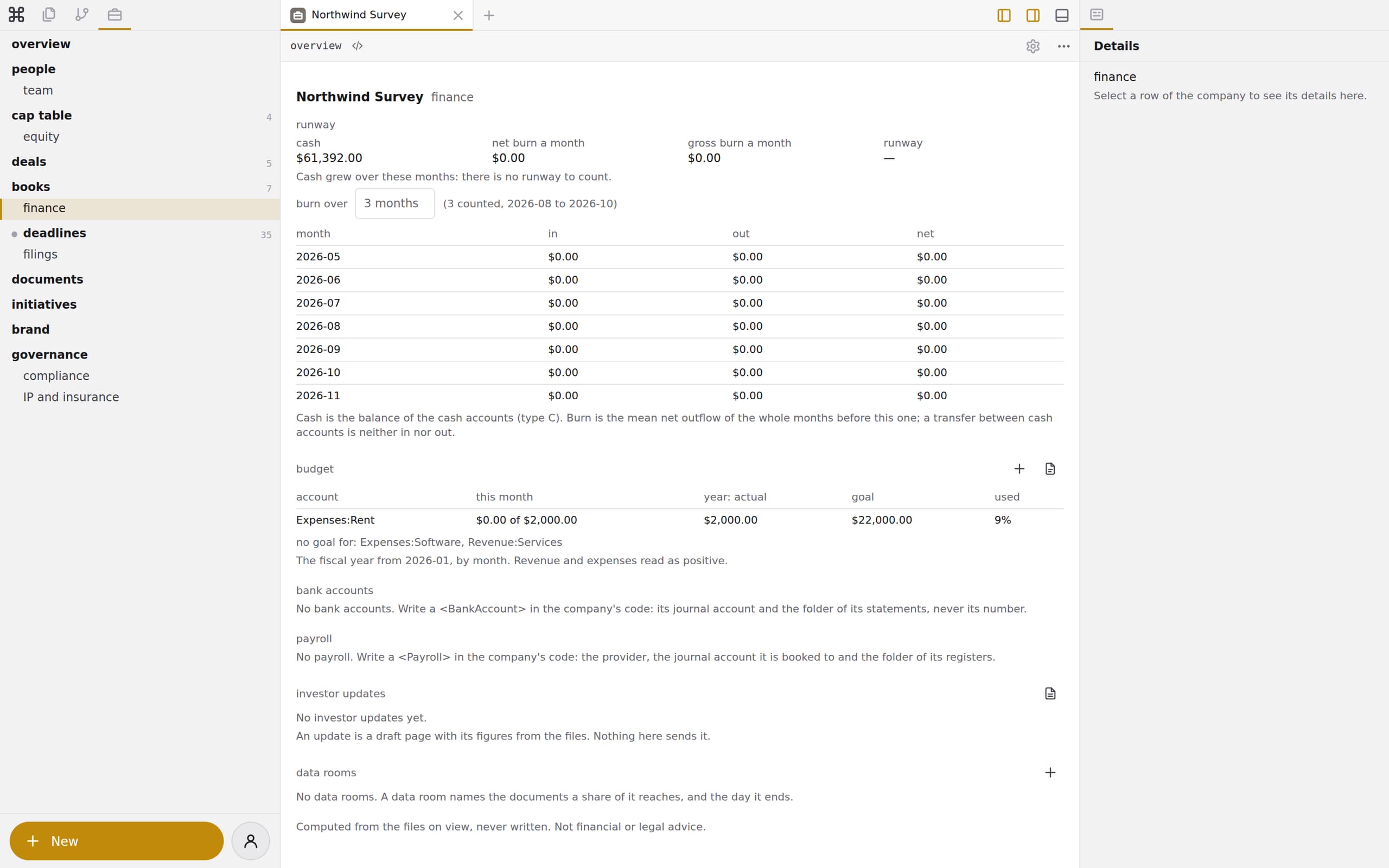
Captured in the workbench: the finance section of Northwind Survey, an example company.
Keep your books as a file.
Add a journal entry from the company app, or ask an agent to infer the entries from your documents.