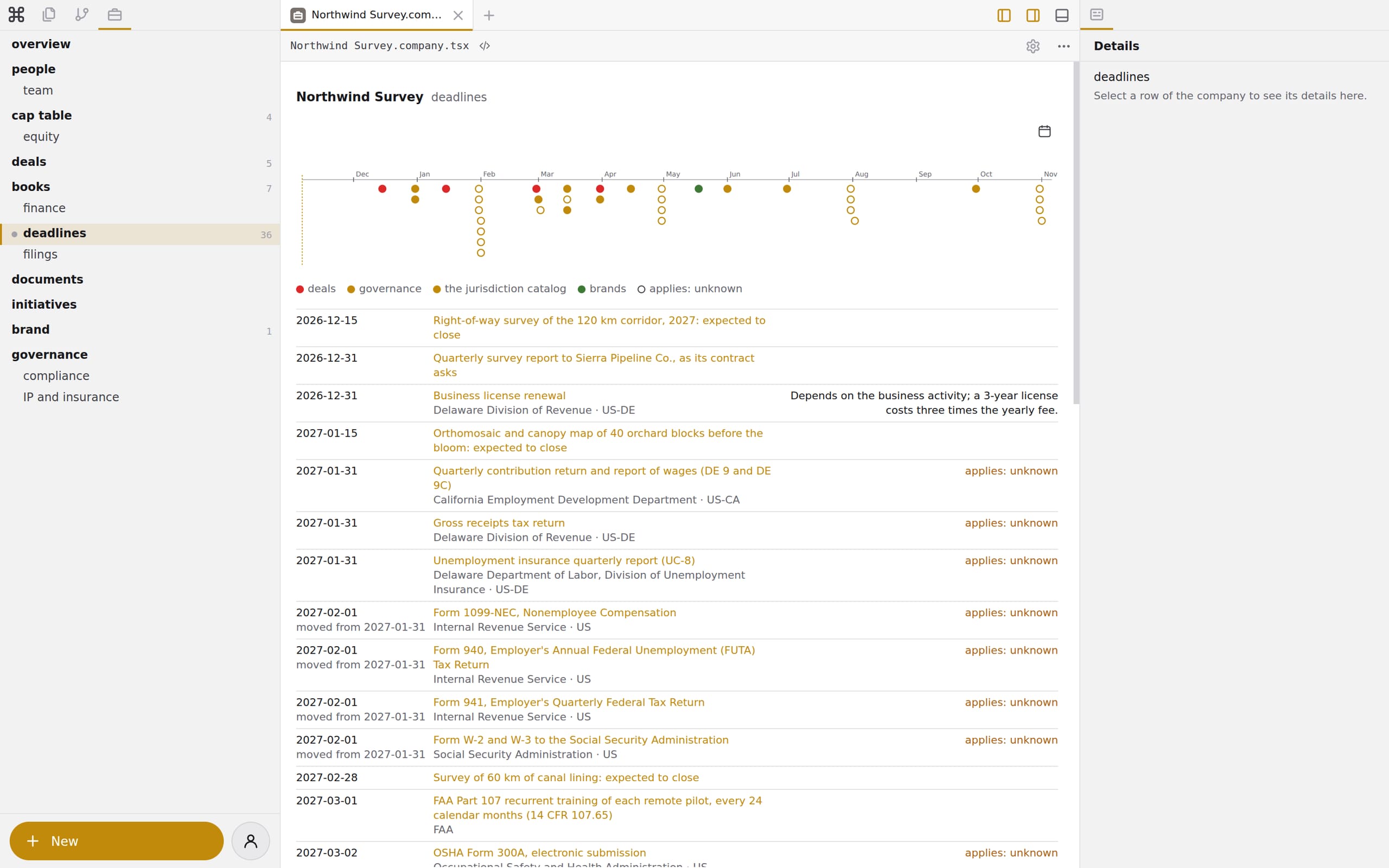
What falls due, with its source.
The company app puts the next year on one timeline: the filing calendar's events, the obligations the company's code states, its domains' renewals and its deals' expected closes. What it cannot know, it says.
An obligation in one element.
What the company binds itself to beside the filings of its jurisdictions, with its first date and how often it recurs. The timeline shows it beside the catalog's filings, its registrations' expiries, its deals' expected closes and its domains' renewals.
<Obligation id="part-107-recurrent" name="FAA Part 107 recurrent training of each remote pilot, every 24 calendar months (14 CFR 107.65)"
            authority="FAA" url="https://www.ecfr.gov/current/title-14/chapter-I/subchapter-F/part-107/subpart-C/section-107.65" due="2027-03-01" />
<Obligation id="pipeline-safety-report" name="Quarterly survey report to Sierra Pipeline Co., as its contract asks" due="2026-12-31" every="quarter" />
Filings, drafted from the catalog.
For a company with an entity, the jurisdiction catalog gives the formation plan, the registered agents to name and what the recurring filings cost. The app drafts each filing; a person signs, submits and pays at the authority, then records it.
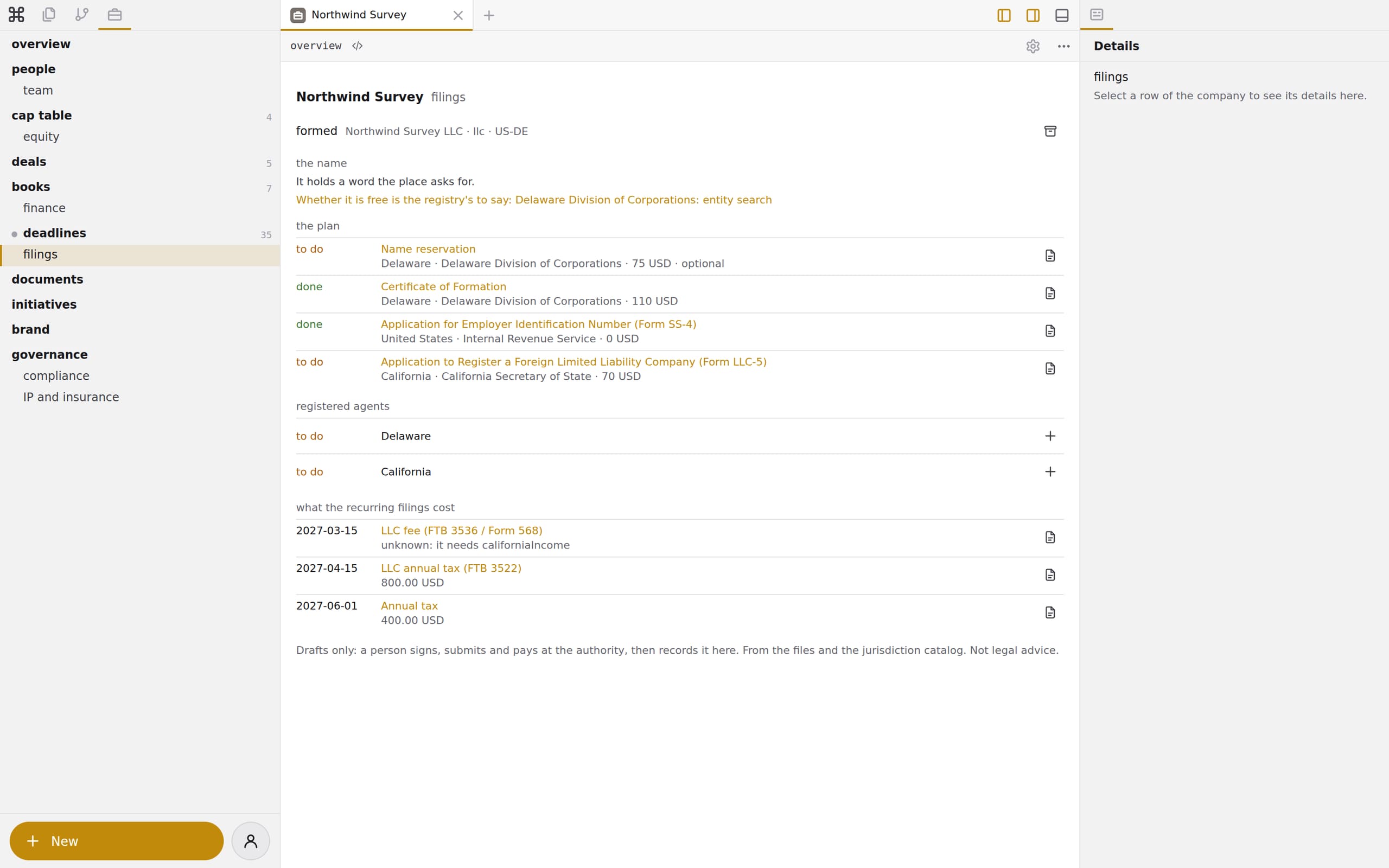
Captured in the workbench: the filings of Northwind Survey, an example company.
See what falls due before it does.
Open your company file, or ask an agent to write the deadlines to your calendar.