More rounds a week
Design the plate, run it, read it, and decide the next one. The faster that loop turns, the faster you learn.
CommandAGI · commandagi.com/in/lab
Your instruments on one bench you can plan on. CommandAGI writes the protocol, checks it before a drop moves, records every run, and carries what you measured into the next round.
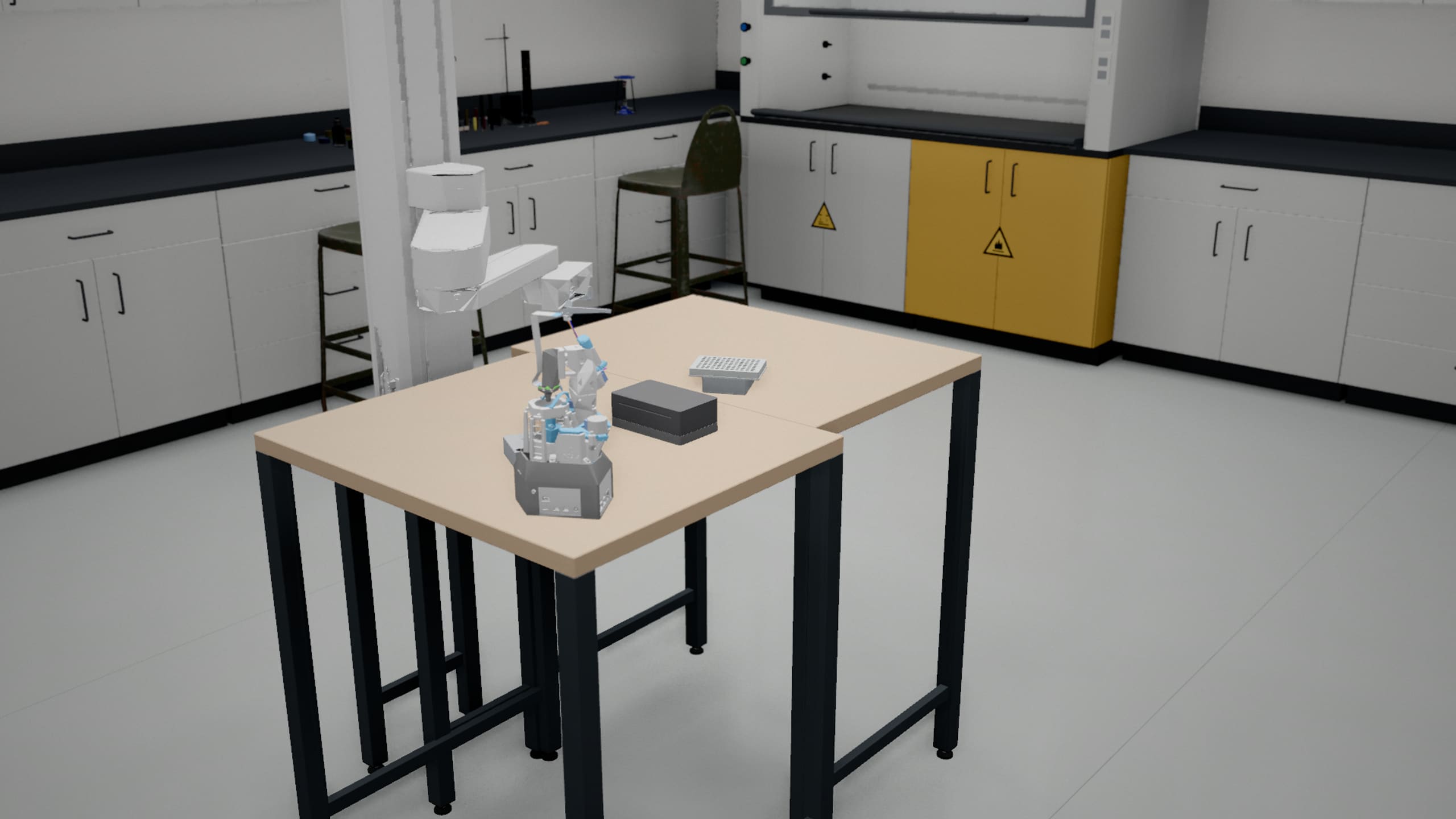
Design the plate, run it, read it, and decide the next one. The faster that loop turns, the faster you learn.
A liquid-handling protocol is checked against the robot's own labware, pipettes and deck before it reaches the robot.
Who ran what, on which plate, with which volumes, and what came back: written down as it happens.
The handler, the shakers, the reader and the microscope on one plan, so plates move between them on a schedule. The shakers, the reader and the liquid handler each have a driver that speaks its maker's own protocol.
Every well its own volume of its own reagents, and dilution series mixed down a column, written for an Opentrons Flex. Each protocol ran in Opentrons' own simulator, and its log was read back well by well: every command in the plan's order, every well with the plan's volume and concentration. Protocols with an over-full tip, a well over capacity, a reagent with no source or a source run dry were refused before they were written. Water and dye only; no robot was used.
Simulated
Picking up tip from A1 of Opentrons Flex 96 Tip Rack 200 µL on slot C1
Aspirating 90.0 uL from A2 of NEST 12 Well Reservoir 15 mL on slot D1 at 716.0 uL/sec
Dispensing 90.0 uL into A1 of Corning 96 Well Plate 360 µL Flat on slot D2 at 716.0 uL/sec
Mixing 3 times with a volume of 50.0 ul
cloud://home/user-commandagi/examples/bio/dbtl/runs/20261124t033555z-ri7d/evidence/protocol.pyWhen A plate-handling arm takes a 96-well plate from its nest to two shakers, an absorbance reader and a microscope's station, and back. The arm's masses come from its CAD, and its speeds and grip from its maker's datasheet. Nothing holds the plate but the friction of its two fingers. A plate left off its nest is picked up and set down square all the same.
nest → heating shaker        9.0 s   0.4 mm
→ heating and cooling shaker 9.1 s   0.4 mm
→ absorbance reader          9.0 s   0.4 mm
→ microscope's station       9.1 s   0.4 mm
→ nest                       9.0 s   0.4 mm
Simulated
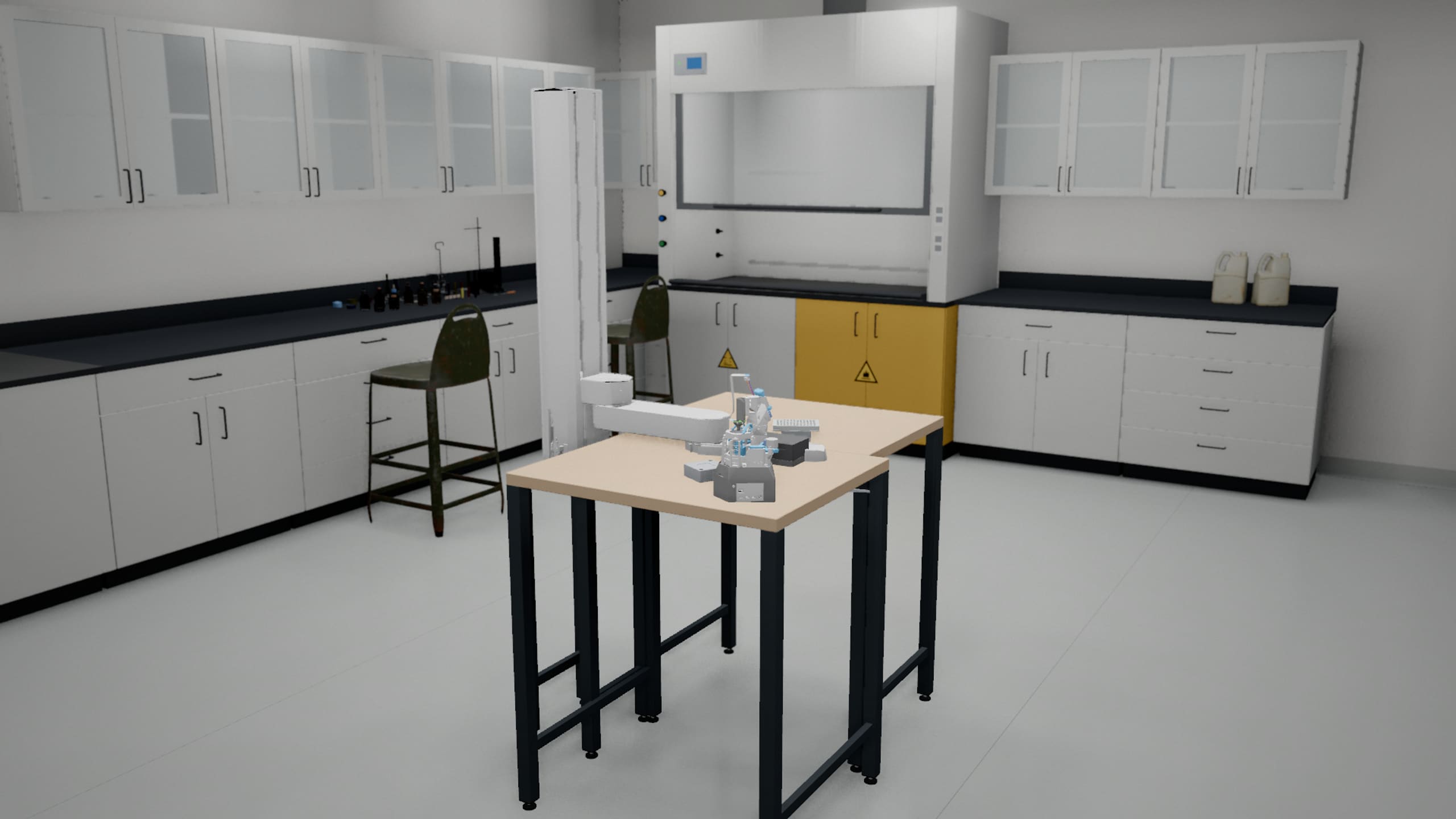
cloud://home/user-commandagi/global/simulations/lab-plate-handling/lab-plate-handling.3d.tsxWhen A dye's linear range, found in two rounds. The first plate is a two-fold dilution series. Its readouts are fitted, and the fit designs the second plate: eleven even levels across the edge it found. Every readout is simulated and labelled so. Each round is recorded as a run, from its plate map to its fit.
Simulated
round 1  two-fold series    linear to 0.25 mM    0.5 mM off the line
round 2  11 even levels     linear to 0.351 mM   0.401 mM off the line
stop     the edge is inside 25 %: no round 3
cloud://home/user-commandagi/examples/bio/dbtl/round-2.jsonWhen Every protocol is the same eight steps, from the plate's design to its tips in the bin. Each step is recorded with what it rests on, and a simulated step says so. A run on real instruments needs those instruments commissioned and its own observations.
Simulated
1  compile sample / condition matrix
2  check wells, tips and liquid budget
3  verify deck, labware and calibration
4  load source and destination plates
5  perform matrix liquid transfer
6  read plate / acquire images
7  export measurements and condition map
8  stage plates and dispose used tips
cloud://home/user-commandagi/examples/bio/examples/simulated-run.jsonWhen Place your instruments, write the plate, and run it in simulation first.