Spindles that keep cutting
A machine waiting on a person is the most expensive thing in the shop. Find out what a tending robot would finish before you buy one.
CommandAGI · commandagi.com/in/machine-shop
Programs from the part, feeds held to the machine, and someone to load the next blank. CommandAGI plans the shop's work, tries the tending in a copy of your cell, and keeps the spindles running.
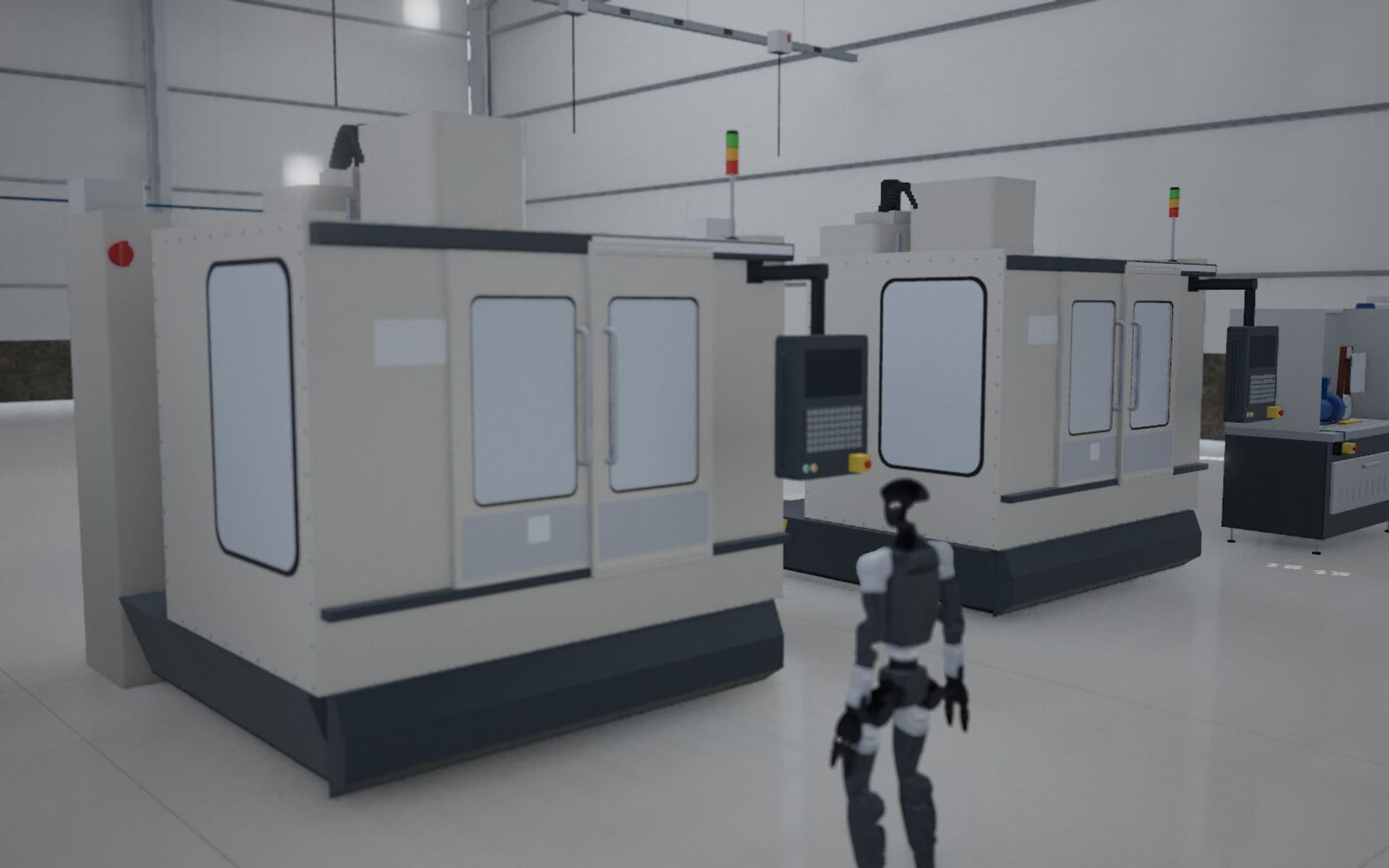
A machine waiting on a person is the most expensive thing in the shop. Find out what a tending robot would finish before you buy one.
Toolpaths come from the design, with feeds worked out from the tool, the material and the machine's limits.
Every job on every machine through the shift, so you know when the next machine pays for itself.
A program runs in simulation first. A real machine runs it only when someone with the right to say so says go.
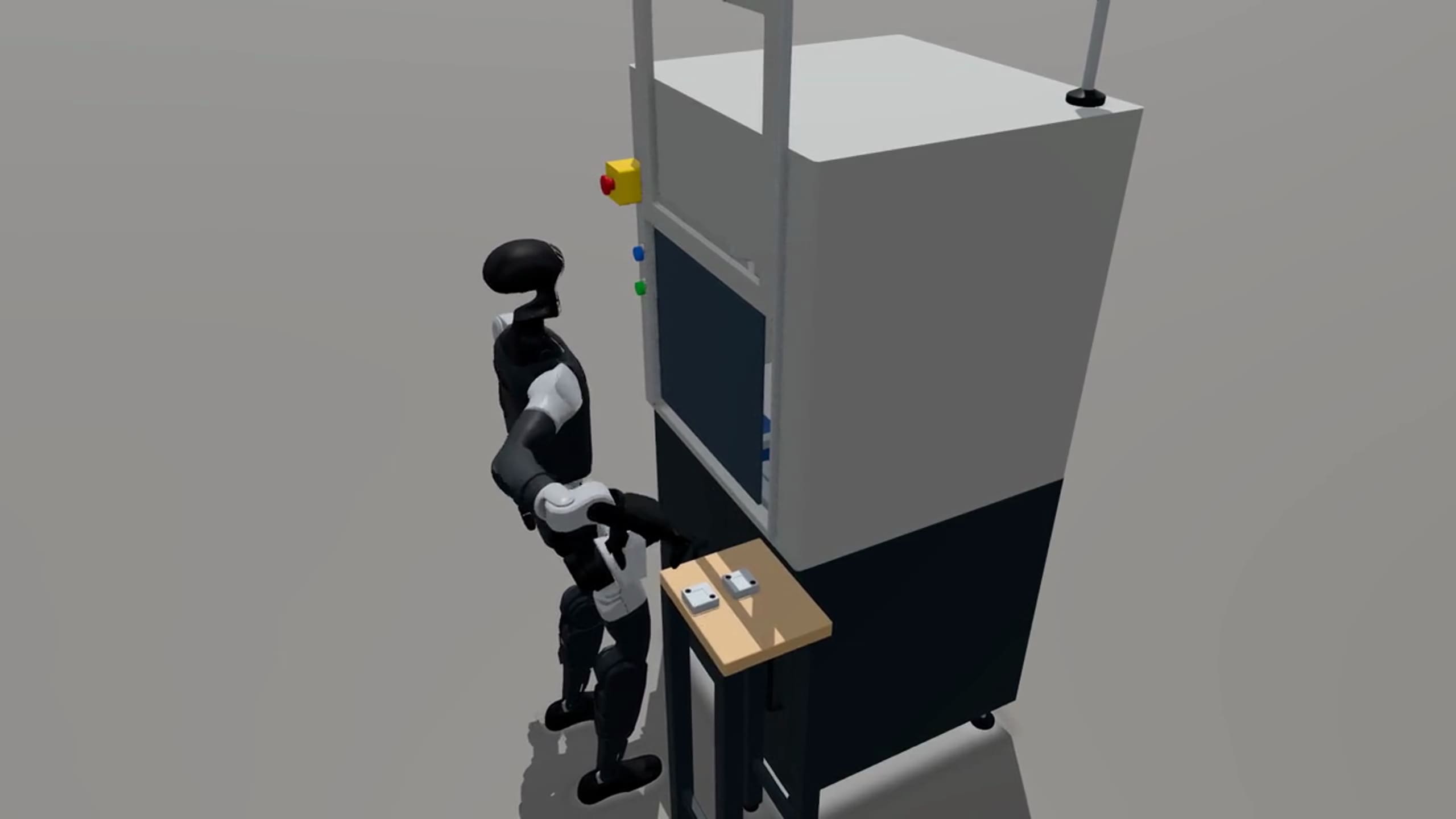
A model of Unitree's G1 humanoid opens the mill's door, sets a blank in the vise, shuts the door, starts the cycle and moves the finished part to the outfeed. It did all of it in twelve of twelve trials. The shop's other jobs are harder: fetching and returning tools and setting fixtures pass their first three trials; inspecting and sorting two parts passes half its trials.
Simulated
cloud://home/user-commandagi/global/factories/g1-factory-tasks.eval.tsxCuándo In Factory C, two machining centres make the actuators' housings. Over an eight-hour day of the plan they were busy all but a few minutes, and every robot the plant made waited on them. That is the number that says a third machine pays. One run of one plan, n = 1.
Simulated
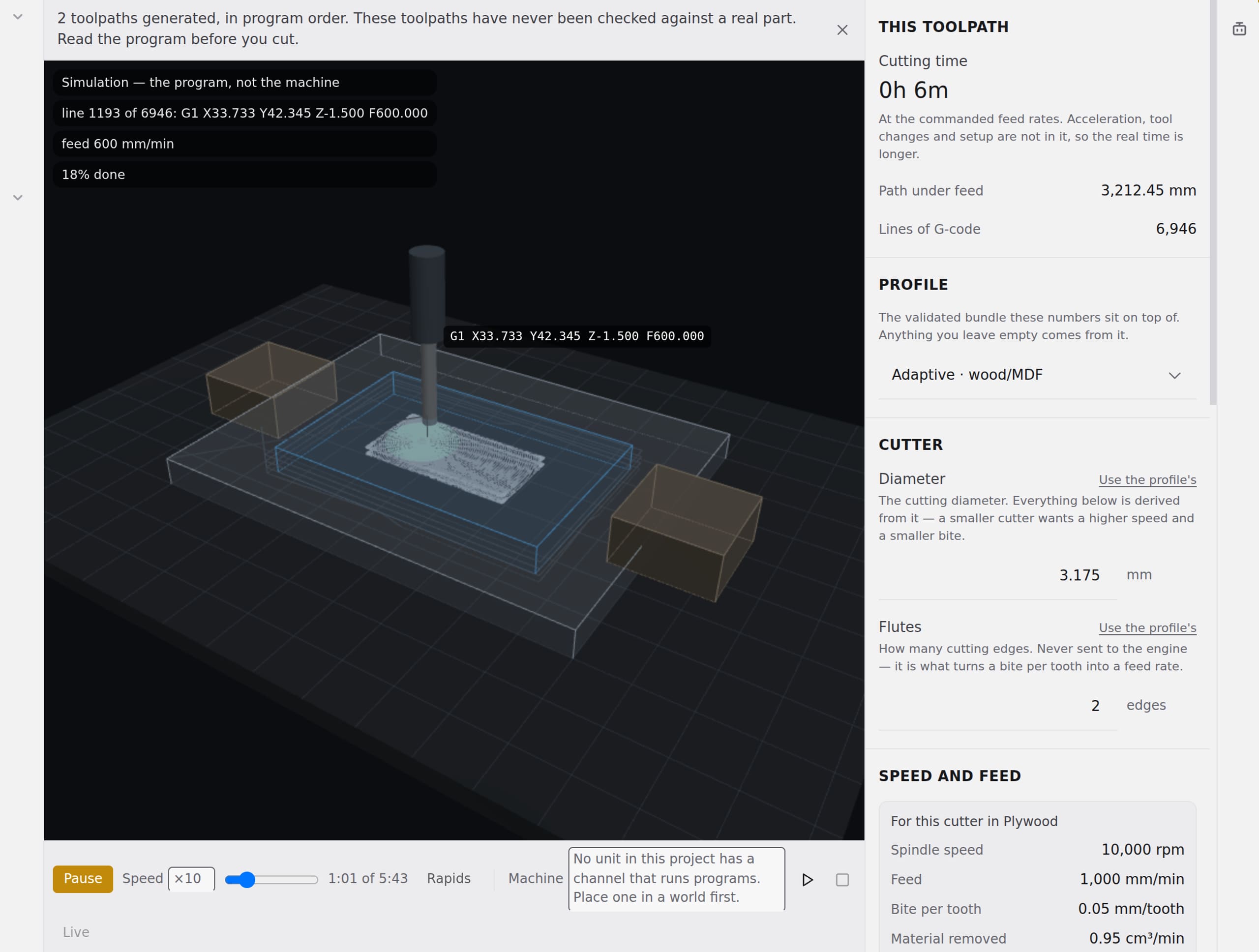
cloud://home/user-commandagi/global/factories/electronics-assembly/plant.tsxCuándo Draw the part, pick the tool and the stock, and the toolpaths come out with their feeds. The simulation cuts them line by line before any metal is touched.

Place your machines, load your jobs, and see what a shift can cut.